
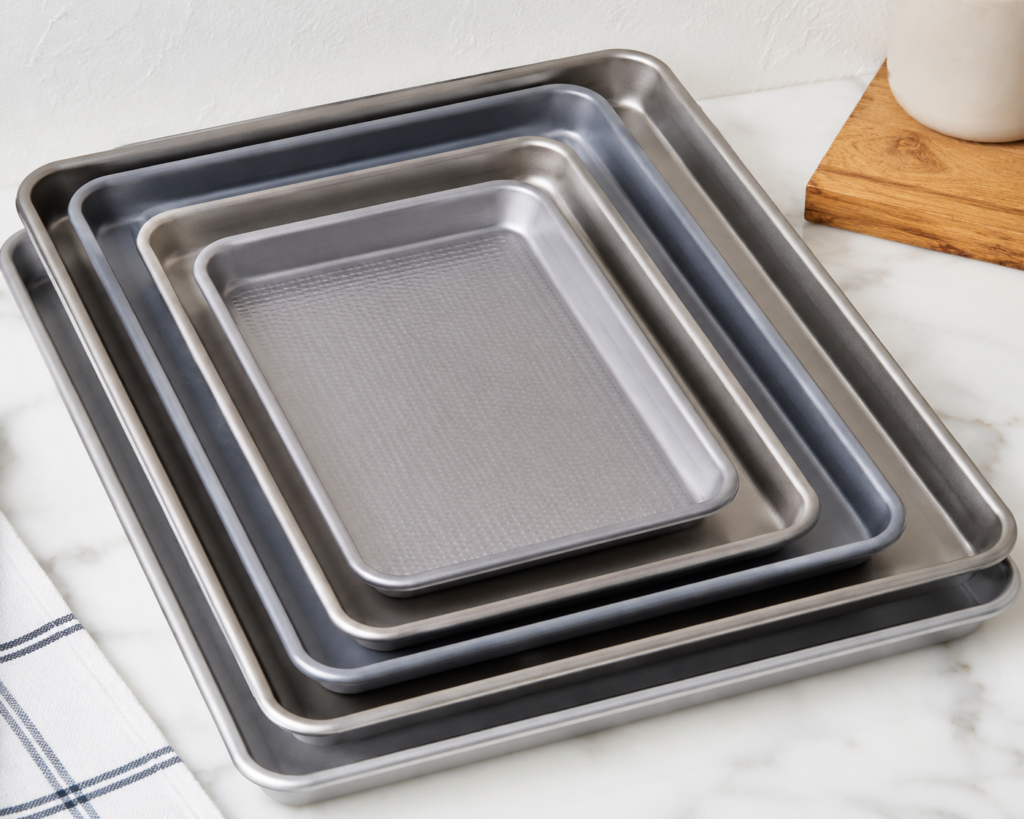
Learning how to organize bakeware can make baking faster, easier, and more enjoyable. Whether you own a few cookie sheets or an extensive collection of cake pans, muffin tins, casserole dishes, and specialty molds, proper organization helps protect your bakeware while maximizing valuable kitchen space. By creating an efficient storage system, you can reduce clutter, prevent damage, and quickly find the right piece whenever you need it.
Decluttering and Material Categorization First
Before reorganizing your bakeware, start with a complete inventory. Remove every baking item from cabinets, drawers, and pantry shelves so you can evaluate what you actually use.
Sort your bakeware into categories such as:
- Metal baking sheets
- Glass baking dishes
- Ceramic baking pans
- Silicone molds and mats
- Muffin tins
- Specialty bakeware
As you sort, inspect each piece for damage. Consider removing:
- Warped baking sheets
- Rusted metal pans
- Cracked glass dishes
- Chipped ceramic bakeware
- Severely scratched non-stick pans
Eliminating damaged or rarely used items frees up storage space and makes organization much easier.
Vertical Filing Systems for Sheet Pans and Trays
One of the most effective bakeware storage solutions is vertical filing. Instead of stacking baking sheets horizontally, store them upright using dividers.
Vertical organizers allow you to separate:
- Cookie sheets
- Roasting pans
- Pizza pans
- Cooling racks
- Cutting boards
Cabinet tray dividers are widely available and can transform unused cabinet space into an efficient storage system. Tension rods can also be installed inside cabinets to create custom slots for individual pans.
Benefits of vertical storage include:
- Easier access
- Reduced scratching
- Better visibility
- More efficient use of space
Because each item can be removed independently, you avoid lifting heavy stacks just to reach one baking sheet.
Deep Drawer Organization with Peg Dividers
Deep kitchen drawers offer excellent storage potential for bakeware if organized correctly.
Adjustable peg systems allow you to customize drawer layouts based on the size and shape of your bakeware. Peg dividers keep items upright and prevent them from shifting when drawers open and close.
Deep drawers work especially well for:
- Cake pans
- Muffin tins
- Glass baking dishes
- Loaf pans
- Brownie pans
The ability to pull out an entire drawer makes accessing bakeware easier than reaching into deep cabinets.
When arranging drawer contents, place frequently used items near the front for quicker access.
Protecting Delicate Coatings and Rim Edges
Many bakeware materials can be damaged by direct contact during storage.
Non-stick coatings may scratch, glass dishes can chip, and ceramic finishes can become damaged if stacked carelessly.
To prevent wear, place protective layers between items, including:
- Felt pan protectors
- Silicone separators
- Soft kitchen towels
- Microfiber cloths
- Paper towels
These barriers reduce friction and help preserve surfaces over time.
Glass casserole dishes benefit particularly from edge protection since chipped rims can compromise both appearance and durability.
Protective storage measures are especially important for premium bakeware that you want to keep in excellent condition for years.
Utilizing Unused Cabinet Vertical Space
Many kitchens contain unused vertical space inside cabinets. Taking advantage of this space can dramatically increase storage capacity.
Consider installing:
Cabinet Shelf Risers
Shelf risers create an additional storage level inside existing cabinets. This allows you to separate smaller bakeware items such as pie plates and tart pans.
Door-Mounted Organizers
The inside of cabinet doors can hold lightweight baking accessories such as:
- Silicone baking mats
- Cooling racks
- Measuring tools
- Cutting boards
Adjustable Shelving
Adjustable shelves allow you to customize storage heights based on the dimensions of your bakeware collection.
Using vertical space effectively helps prevent overcrowding while improving accessibility.
Small Bakeware and Specialty Mold Management
Small baking accessories often create the most clutter if they are not organized properly.
Group similar items together using labeled containers or clear storage bins.
Examples include:
Baking Accessories
- Cookie cutters
- Pastry tools
- Decorating tips
- Rolling pin accessories
Silicone Items
- Cupcake liners
- Mini molds
- Baking mats
Seasonal Bakeware
- Holiday cookie cutters
- Specialty cake molds
- Themed baking pans
Store seasonal items on upper shelves or less-accessible storage areas since they are not used year-round.
Clear containers make it easy to identify contents without opening every bin.
Humidity Control and Dry Storage Zones
Environmental conditions play a major role in preserving bakeware.
Store baking equipment in cool, dry locations away from excessive moisture and heat sources.
Avoid placing bakeware near:
- Dishwashers
- Ovens
- Stovetops
- Steam-producing appliances
Excess humidity can contribute to
- Rust formation on carbon steel
- Water spots on metal pans
- Odors in silicone bakeware
- Premature deterioration of certain finishes
Maintaining a dry storage environment helps protect both metal and non-metal bakeware from long-term damage.
What is the most space-efficient way to organize bakeware in a small kitchen with limited cabinets?
To organize bakeware efficiently in a small kitchen, vertical storage is generally the best solution. Instead of stacking baking sheets and pans horizontally, use vertical organizers, cabinet dividers, or tension rods to store them upright. This approach uses cabinet height more effectively, reduces clutter, and allows you to remove individual items without disturbing the rest of the collection.
Conclusion
Learning how to organize bakeware properly can transform both your kitchen workflow and storage efficiency. By decluttering unused items, storing sheet pans vertically, protecting delicate surfaces with dividers, and utilizing deep drawers and unused cabinet space, you can create a system that is both practical and easy to maintain. Keeping bakeware grouped by type, protecting it from humidity, and organizing smaller accessories in labeled containers further improves accessibility. With a thoughtful organization strategy, your bakeware will stay protected, your kitchen will remain tidy, and every baking project will become easier from start to finish.