
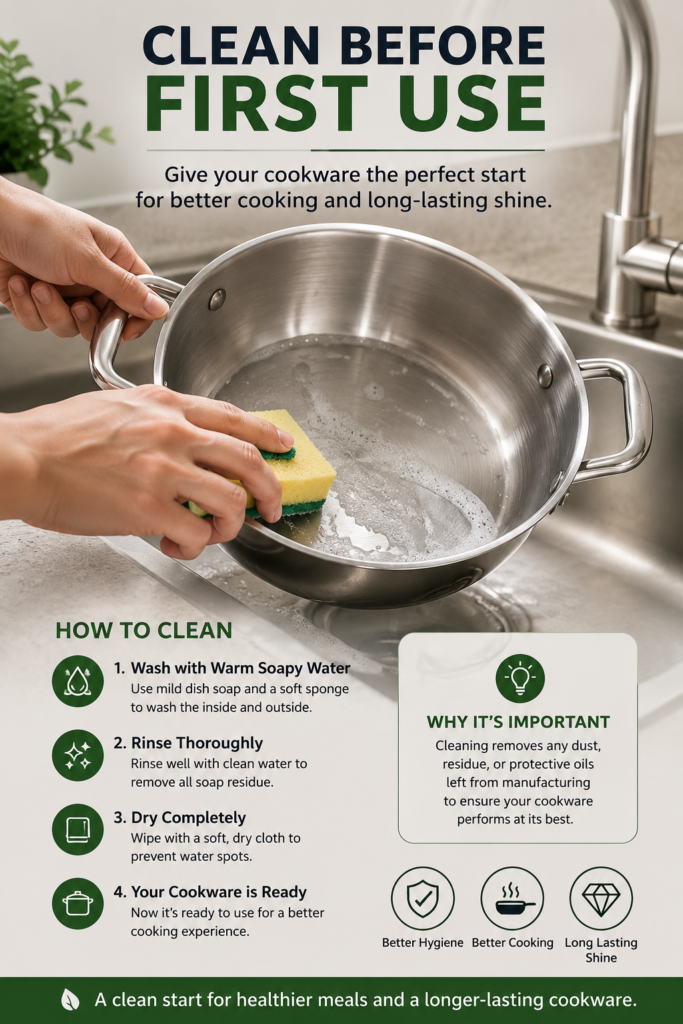
Keeping cookware clean is important for both cooking performance and longevity. Different materials require different care methods, and using the wrong cleaning technique can damage surfaces, reduce efficiency, or shorten the lifespan of your pots and pans. Whether you own stainless steel, cast iron, ceramic, or aluminum cookware, following the right cleaning practices will help maintain their appearance and functionality.
1. Material-Specific Cleaning Protocols
Not all cookware should be cleaned the same way. Stainless steel can typically handle stronger scrubbing methods, while ceramic and non-stick cookware require a gentler approach. Cast iron needs special attention to preserve its seasoning, and aluminum cookware can become scratched or discolored if cleaned with harsh tools.
Always choose cleaning tools that match the cookware material. Soft sponges, microfiber cloths, and non-abrasive brushes are generally safe options. Avoid using rough scrubbers that can scratch surfaces or remove protective coatings.
2. Thermal Shock Prevention and Initial Prep
One of the most common cookware care mistakes is placing a hot pan directly into cold water. This sudden temperature change, known as thermal shock, can cause warping, weaken bonded bases, and even create cracks in certain coatings.
Instead, allow cookware to cool naturally for a few minutes before washing. If food residue is stuck to the surface, fill the pan with warm water and a small amount of mild dish soap. Let it soak briefly to loosen debris before cleaning. This method reduces the need for aggressive scrubbing and helps protect the cookware’s finish.
3. Removing Burnt Food and Carbonized Grease
Burnt food and stubborn grease can be difficult to remove, but harsh chemicals are often unnecessary. A simple and effective method is to add water and baking soda to the pan and bring the mixture to a gentle simmer. As the solution heats, baked-on residue begins to loosen, making it easier to remove.
For mineral stains, discoloration, or heat marks, mild natural acids such as white vinegar or lemon juice can be helpful. These ingredients break down deposits and restore the cookware’s appearance without causing excessive wear. Always rinse thoroughly after using acidic cleaners.
4. Protecting Non-Stick and Seasoned Surfaces
Non-stick coatings and seasoned cast iron surfaces require extra care during cleaning. Abrasive pads, steel wool, and harsh chemical cleaners can damage protective layers and reduce cooking performance.
Use soft cleaning tools and mild detergents whenever possible. For cast iron cookware, avoid prolonged soaking and ensure the pan is thoroughly dried after washing. Proper maintenance helps preserve the natural non-stick qualities that develop over time.
5. Proper Drying, Polishing, and Storage Habits
Drying cookware completely is just as important as washing it. Moisture left on surfaces can lead to rust, water spots, and mineral buildup. Cast iron pans benefit from a few minutes of stovetop drying to remove hidden moisture before storage.
When storing cookware, avoid stacking pans directly on top of each other without protection. Felt pan protectors, soft cloths, or kitchen towels placed between cookware pieces help prevent scratches, dents, and coating damage. Organized storage keeps cookware in excellent condition and ready for daily use.
Is Dishwasher Cleaning Safe for All Cookware?
Not always. Although some cookware is marked dishwasher-safe, regular hand washing is the best way to maintain performance and appearance. Strong detergents and high heat may shorten the lifespan of non-stick coatings, cast iron seasoning, and certain metal finishes.
Conclusion
Proper cookware cleaning starts with using the right care method for each material. Gentle washing, complete drying, and careful storage help prevent damage, maintain cooking performance, and extend the life of your cookware for years.